
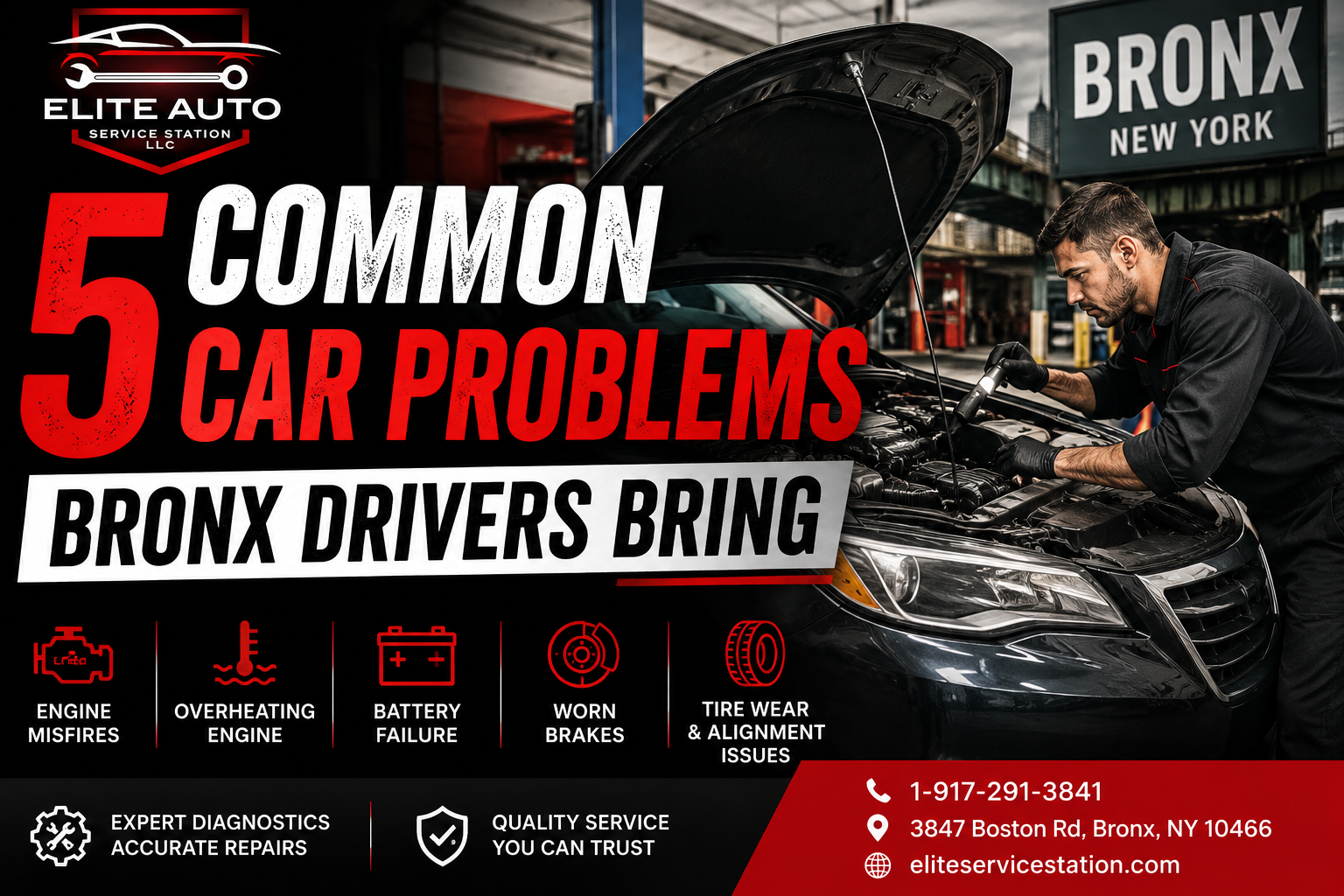
Quick Summary: Bronx drivers deal with a unique mix of stop-and-go traffic, potholes, harsh winters, and long commutes all of which take a toll on a vehicle. The five most common issues local repair shops see are: check engine light warnings, brake wear, battery and electrical failures, suspension damage from potholes, and overheating engines. Catching these problems early through routine diagnostics and maintenance can save drivers hundreds of dollars and prevent breakdowns on the road. Below, we break down why each issue happens, the warning signs to watch for, and when it’s time to see a mechanic.
Introduction
If you drive in the Bronx, you already know your car works harder here than it would on a quiet suburban road. Constant traffic lights, pothole-covered streets, stop-and-go congestion on the Cross Bronx Expressway, and extreme seasonal temperature swings all add up. Over time, this daily grind leads to a predictable set of mechanical issues that local repair shops see again and again.
Understanding these common problems doesn’t just help you recognize when something’s wrong it helps you catch small issues before they turn into expensive repairs. Here are the five car problems Bronx drivers most frequently bring in, why they happen, and what you can do about them.
1. Check Engine Light Warnings
The check engine light is one of the most common reasons Bronx drivers schedule a repair visit and also one of the most misunderstood. This light can indicate anything from a loose gas cap to a failing oxygen sensor or a more serious engine misfire.
Why it happens so often in the Bronx: Stop-and-go traffic causes more wear on components like oxygen sensors, catalytic converters, and ignition coils than steady highway driving does. Short trips also prevent the engine from reaching full operating temperature, which can trigger emissions-related codes over time.
What to watch for:
- Steady (not flashing) check engine light
- Rough idling or hesitation when accelerating
- A noticeable drop in fuel efficiency
What to do: A full diagnostic scan reads the vehicle’s onboard computer to identify the exact fault code, rather than guessing. Ignoring a steady check engine light for too long can allow a minor sensor issue to turn into a costlier repair, like a damaged catalytic converter.
If your check engine light is on right now, don’t wait it out — book a diagnostic check and get a clear answer instead of a guess.
2. Worn Brake Pads and Squeaking Brakes
Heavy urban traffic means constant braking at lights, in congestion, and in stop-and-go conditions on local streets. This makes premature brake wear one of the most frequent issues Bronx drivers experience.
Why it happens so often in the Bronx: Unlike highway driving, where brakes are used sparingly, city driving involves near-constant braking and accelerating. This repetitive friction wears down brake pads faster than manufacturers typically estimate.
What to watch for:
- A squealing or grinding noise when braking
- The car pulling to one side while braking
- A soft or spongy brake pedal
- Vibration through the steering wheel when slowing down
What to do: Brake pads should generally be inspected every 10,000–12,000 miles, but city drivers often need checks more frequently. Catching worn pads early prevents damage to the rotors, which are significantly more expensive to replace than pads alone.
Hearing a squeal every time you brake? Schedule a brake inspection before pads wear down to the rotors.
3. Battery and Electrical Issues
Cold winters and hot summers are hard on a car’s electrical system, and Bronx drivers frequently bring in vehicles that won’t start, have flickering dashboard lights, or experience random electrical glitches.
Why it happens so often in the Bronx: Extreme temperature swings between winter and summer accelerate battery degradation. Frequent short trips also don’t give the alternator enough time to fully recharge the battery, leaving it chronically undercharged.
What to watch for:
- Slow engine cranking when starting the car
- Dashboard lights dimming or flickering
- Electrical accessories (windows, radio) behaving inconsistently
- A battery warning light on the dashboard
What to do: A battery and charging system test can determine whether the issue is the battery itself, the alternator, or a wiring problem. Replacing a battery proactively — usually every 3–5 years — is far cheaper than an unexpected breakdown.
Slow to start in the morning? Get your battery and charging system tested before it leaves you stranded.
4. Suspension and Steering Damage from Potholes
Anyone who drives regularly in the Bronx knows potholes are unavoidable, especially after winter freeze-thaw cycles. Hitting them repeatedly causes real, cumulative damage to a vehicle’s suspension and steering components.
Why it happens so often in the Bronx: Aging infrastructure combined with harsh winters creates deep, frequent potholes on local roads. Even a single hard hit can bend a wheel or damage a strut, while repeated smaller impacts wear down bushings and alignment over time.
What to watch for:
- A shaking or vibrating steering wheel, especially at higher speeds
- The car pulling to one side
- Uneven tire wear
- Clunking or knocking noises over bumps
What to do: A suspension and alignment inspection can identify whether the issue is a damaged strut, worn ball joint, or simply a car that needs realignment. Left unaddressed, these issues can accelerate tire wear and make handling unpredictable.
Feeling a shake in your steering wheel after hitting one too many potholes? Get a suspension and alignment check before it wears down your tires unevenly.
5. Overheating Engines in Traffic
Between summer heat and heavy Bronx traffic, engine overheating is a common issue — especially for cars already dealing with an aging cooling system.
Why it happens so often in the Bronx: Idling in traffic doesn’t allow airflow through the radiator the way highway driving does, putting more strain on the cooling system. Combined with summer heat, this makes marginal cooling systems fail faster.
What to watch for:
- The temperature gauge creeping toward “H”
- Steam coming from under the hood
- A sweet smell (coolant) inside or outside the car
- Low coolant levels that need frequent topping off
What to do: A cooling system inspection can catch a failing thermostat, a small coolant leak, or a weak water pump before it leads to a full breakdown. Never continue driving with an overheating engine pulled over and let it cool before continuing.
If your temperature gauge keeps creeping up in traffic, get your cooling system inspected before it turns into a breakdown.
Final Thoughts
None of these five problems are unusual they’re simply the natural result of driving in a busy, pothole-prone, high-traffic environment like the Bronx. The good news is that almost all of them are preventable or catchable early with routine inspections and prompt attention to warning signs.
If your car is showing any of these symptoms, getting it looked at sooner rather than later is always the more affordable option. A quick diagnostic visit today can prevent a much bigger repair bill down the road.
Frequently Asked Questions
Q1: How do I know if my check engine light is serious?
A steady check engine light usually means the issue can wait for a scheduled appointment, but a flashing light indicates a more serious problem, like an engine misfire, and should be checked immediately to avoid damage to the catalytic converter.
Q2: How often should brakes be inspected for city driving?
City drivers in stop-and-go traffic, like in the Bronx, should have their brakes inspected every 10,000 miles or sooner if they notice squeaking, grinding, or a soft pedal feel.
Q3: Can hitting one pothole really damage my car?
Yes. A single hard pothole impact can bend a wheel, damage a tire sidewall, or throw off your alignment, even if there’s no visible damage right away.
Q4: Why does my car overheat only in traffic but not on the highway?
Highway driving provides constant airflow to cool the radiator, while idling in traffic doesn’t. If your car overheats specifically in traffic, it often points to a weak cooling fan, low coolant, or an aging radiator.
Q5: How long do car batteries typically last in NY weather?
Most batteries last 3–5 years, but extreme winter cold and summer heat in New York can shorten that lifespan, making it worth testing your battery annually once it passes the 3-year mark.