
If you’ve ever stood at the counter during an oil change and been asked “synthetic or conventional?”, you’re not alone. Most drivers know oil keeps the engine running smoothly, but far fewer understand what actually separates these two options or which one their car really needs. At Elite Auto Service Station, one of the questions we hear most from customers looking for auto repair in New Rochelle, NY is exactly this one. So let’s break it down in plain language.
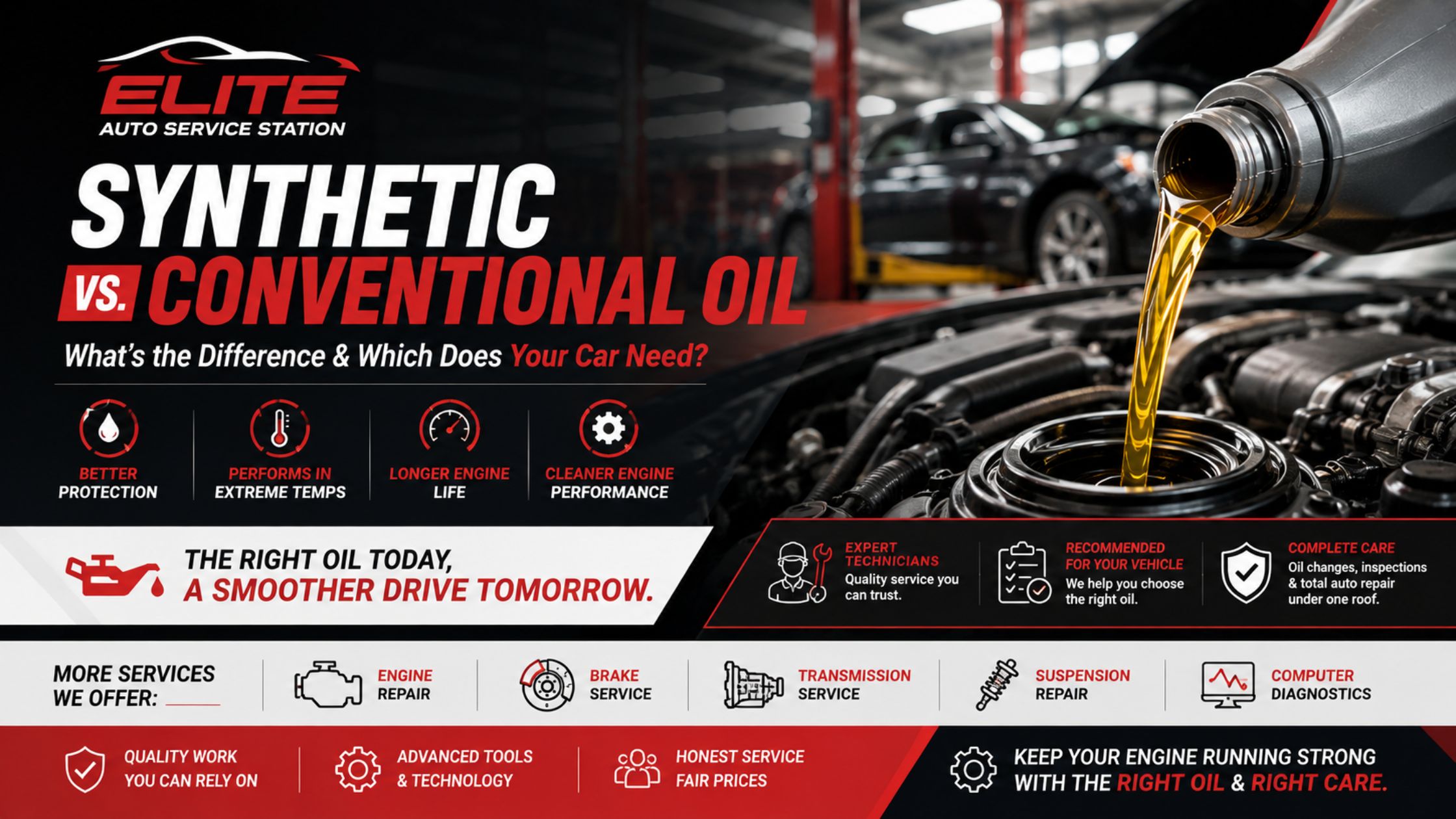
What Is Conventional Oil?
Conventional oil is refined directly from crude oil. It’s been the standard choice for decades and works well for many everyday vehicles, especially older engines or cars with simpler mechanical designs. It’s typically the more affordable option upfront, but it also breaks down faster under heat and stress, which means it needs to be changed more often, usually every 3,000 to 5,000 miles.
Think of conventional oil as reliable, budget-friendly, and well understood. It gets the job done, but it asks more of you in terms of maintenance frequency.
What Is Synthetic Oil?
Synthetic oil is engineered in a lab rather than simply pulled from the ground. Through a more advanced refining and chemical process, synthetic oil molecules are more uniform in size and shape. That might sound like a small technical detail, but it makes a real difference in how the oil performs and in how much you end up spending on repairs down the line.
Synthetic oil:
- Resists breaking down in extreme heat or cold
- Flows better during cold starts, protecting your engine right away
- Leaves fewer deposits and sludge behind
- Lasts longer between changes, often 7,500 to 10,000 miles or more
- Helps reduce strain on connected systems, lowering the chances you’ll need a transmission repair service sooner than expected
Because it’s more refined, synthetic oil usually costs more per oil change. But many drivers find that the longer intervals between services, the added engine protection, and fewer trips in for major repairs make up for the higher price over time.
Full Synthetic vs. Synthetic Blend
It’s worth mentioning there’s actually a middle option: synthetic blend oil. This mixes conventional and synthetic oils together, offering some of the performance benefits of full synthetic at a lower price point than going fully synthetic. It’s a popular choice for drivers who want better protection than conventional oil but aren’t ready for the full synthetic price tag.
So, Which One Does Your Car Actually Need?
This is where things get personal because the right oil for your car depends on a few specific factors, not just preference.
Check your owner’s manual first: Many newer vehicles, especially those with turbocharged or high-performance engines, are actually designed to require full synthetic oil. Using conventional oil in these engines can lead to premature wear and may even affect your warranty coverage.
Consider your driving habits: If you do a lot of stop-and-go city driving, tow heavy loads, or drive in extreme temperatures hot summers or cold winters synthetic oil’s added protection can make a noticeable difference in how your engine holds up over time.
Think about your vehicle’s age and mileage: Older engines with higher mileage sometimes do better with conventional oil or high-mileage formulas specifically designed to condition aging seals and reduce leaks. Newer engines generally benefit more from synthetic’s superior protection.
Factor in your budget and maintenance schedule: If you’d rather pay a bit more per service but come in less often, synthetic makes sense. If you don’t mind more frequent visits and want to keep costs lower per visit, conventional oil is still a perfectly valid choice for many vehicles.
When in doubt, it’s always best to have a technician take a look at your specific make, model, and driving history. What works well for your neighbor’s car might not be the right call for yours.

Why Regular Oil Changes Matter, No Matter What You Choose
Oil isn’t just there to lubricate moving parts. It also helps regulate engine temperature, reduces friction, carries away contaminants, and protects against corrosion. Skipping or delaying oil changes regardless of which type you use is one of the fastest ways to shorten your engine’s lifespan and end up facing bigger, more expensive repairs down the road.
Neglected oil can also contribute to problems well beyond the engine itself. Poor lubrication puts extra strain on other systems, and drivers who skip maintenance often find themselves searching for brake repair near me or looking into a transmission repair service sooner than they expected, simply because small issues were allowed to snowball.
A Simple Way to Decide
If you’re still not sure which oil is right for your vehicle, here’s a quick way to think about it:
- Newer car, turbocharged engine, or under warranty? → Full synthetic is likely required or recommended.
- Older vehicle with higher mileage and no major issues? → Conventional or high-mileage oil may work just fine.
- Want a balance of protection and cost? → A synthetic blend is a solid middle ground.
- Not sure at all? → Bring your vehicle in and let a technician check your manual’s recommendation and your engine’s actual condition.
Trust Your Local Shop to Get It Right
At Elite Auto Service Station, we don’t believe in a one-size-fits-all approach to oil changes. Every recommendation we make is based on your specific vehicle, how you drive it, and what will actually keep your engine healthy for the long run. Whether you need a straightforward oil change or you’re due for a broader inspection covering your brakes, suspension, or transmission, our team is here to walk you through your options honestly no upselling, just straight answers.
If you’re due for service and searching for dependable auto repair in New Rochelle, NY, stop by or give us a call. We’ll help you figure out exactly what your car needs, starting with something as simple and as important as the oil in your engine.
FAQs
Can I switch from conventional to synthetic oil at any time?
Yes, it’s safe to switch between oil types. Synthetic oil won’t damage an engine that previously used conventional oil.
Is synthetic oil really worth the extra cost?
For most modern engines, yes the longer intervals and added protection often offset the higher price per change.
How do I know what type my car requires?
Check your owner’s manual or ask a technician to confirm the manufacturer’s recommendation for your specific engine.
Does synthetic oil last longer than conventional oil?
Generally yes. Synthetic oil can go 7,500–10,000+ miles between changes, compared to 3,000–5,000 for conventional.
Can using the wrong oil type cause other car problems?
Over time, yes. Poor lubrication can strain other systems, sometimes leading to issues that require brake or transmission attention.
0 Comments